
 "Excellent service and fast delivery"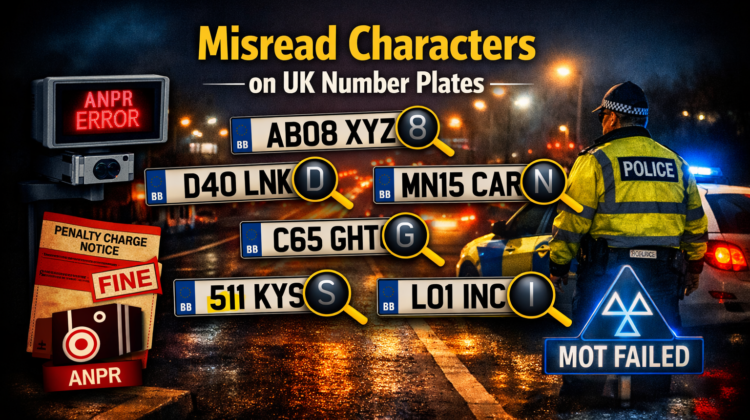
Ambiguous letter or number can create a chain of avoidable headaches. With modern plates using the Charles Wright typeface, the system is designed for clarity — but real‑world conditions, ageing plates, and stylistic modifications can still lead to confusion.
This guide breaks down the most commonly misread characters, why they’re misread, and how drivers can avoid the compliance and legal issues that follow.
Why Misread Characters Matter More Than Ever
Automatic Number Plate Recognition (ANPR) systems are now used for:
- Congestion and clean‑air zone charging
- Speed enforcement
- Parking management
- Toll roads
- Police intelligence and tracking
When a plate is unclear, altered, or simply worn, ANPR cameras can misinterpret characters — and that can lead to:
- Incorrect fines
- Delayed insurance claims
- MOT failures
- Police stops
- Problems transferring or retaining a private plate
The DVLA is clear: plates must be easy to read at a glance. Anything that reduces clarity — spacing, font distortion, dirt, damage, or stylised characters — risks breaching the rules. (Official guidance: DVLA number plate rules.
The Most Commonly Misread Characters on UK Plates
Below are the characters that cause the most trouble for both humans and ANPR systems — and why.
1. O vs 0
The classic problem pair.
- O (letter) is perfectly round.
- 0 (number) is slightly narrower.
In the Charles Wright font, the difference is subtle — especially at distance or when the plate is dirty. This pair is responsible for the majority of ANPR misreads, particularly on older or faded plates.
Why it matters: A misread O/0 can cause incorrect congestion charges, parking fines, or police flags for “unregistered vehicle”.
2. B vs 8
Another notorious pair.
- B has two separate loops.
- 8 is more symmetrical and slightly narrower.
But when plates are damaged, cracked, or printed with non‑standard thickness, the distinction blurs.
Why it matters: Misreads often occur when plates are 3D gel or 4D laser‑cut, especially if the characters are too thick or reflective.
3. D vs 0
Less common, but still problematic.
A worn or dirty D can lose its vertical stroke, making it resemble a 0. This is especially common on older acrylic plates where the black layer begins to fade.
4. M vs N
This is more of a human‑error misread than an ANPR issue.
- M has three vertical strokes.
- N has two.
But at speed, in poor weather, or when a plate is angled, the difference becomes harder to spot.
Why it matters: Witness reports, dashcam footage, and CCTV often misidentify these characters — which can complicate insurance claims.
5. C vs G
A partially obscured G (mud, snow, or a screw cap) can look like a C.
Why it matters: This is a common cause of incorrect parking enforcement notices, especially in multi‑storey car parks with older camera systems.
6. 5 vs S
This pair becomes especially problematic on:
- Plates with non‑standard fonts
- Plates with stylised 3D/4D characters
- Plates with excessive gloss or shadowing
Why it matters: Many “show plates” exaggerate the curves of the S, making it resemble a 5 — which is illegal on the road.
7. 1 vs I
The Charles Wright font helps differentiate these, but:
- A faded 1 can look like a capital I
- A dirty I can look like a 1
This is especially common on plates that have been jet‑washed too aggressively, causing character thinning.
Why These Misreads Happen
1. Non‑Standard Fonts
Only the Charles Wright font is legal. Anything else — even slight variations — increases the risk of misreads.
2. Illegal Spacing
Changing spacing to “spell a name” is a common MOT fail and a major cause of ANPR errors.
3. 3D/4D Characters
Legal when compliant — but many aren’t.
Thick gel digits or deep laser‑cut acrylic can cast shadows that distort character shapes.
4. Damage or Wear
Cracks, fading, delamination, and UV damage all distort character clarity.
5. Dirt and Obstruction
Even a small patch of mud or a screw cap can turn a G into a C or an 8 into a B.
How Misread Characters Affect Drivers
1. Incorrect Fines and Penalties
Misreads can trigger:
- Congestion charge penalties
- Clean Air Zone charges
- Parking fines
- Toll charges
Drivers often only discover the issue when a penalty arrives.
2. MOT Failures
The MOT manual is explicit: If a plate is hard to read, it fails.
Common reasons include:
- Incorrect font
- Incorrect spacing
- Excessive wear
- Damaged or obscured characters
- Non‑compliant 3D/4D styles
For a full breakdown of MOT plate rules, see our guide: MOT Number Plate Fails: The 10 Most Common Reasons.
3. Insurance and Accident Disputes
If a witness or camera misreads a plate, it can complicate:
- Hit‑and‑run investigations
- Parking collisions
- Fraud cases
- Claims involving multiple vehicles
A clear, compliant plate protects you.
4. Police Stops and Seizures
If ANPR flags your vehicle as “unregistered” due to a misread character, you may be stopped — even if your plate is legal.
How to Avoid Misread Characters
1. Use a Reputable Supplier
A legal supplier will always use:
- Charles Wright font
- Correct spacing
- BS AU 145e‑compliant materials
- Proper character thickness
For guaranteed compliance, order from a trusted specialist: RegPlates.com – Buy Legal Private Plates
2. Avoid Over‑Stylised 3D/4D Plates
They look premium, but many are non‑compliant — and even legal versions can cause readability issues.
3. Replace Worn or Faded Plates Quickly
If characters are thinning, peeling, or cracking, replace the plate before it becomes an MOT issue.
4. Keep Plates Clean
A quick wipe can prevent ANPR misreads — especially in winter.
5. Never Alter Spacing or Character Shapes
It’s illegal, it fails the MOT, and it increases the risk of fines.
Misread characters on UK plates aren’t just a cosmetic issue — they can lead to fines, MOT failures, insurance complications, and unnecessary police stops. With ANPR now central to road enforcement, clarity and compliance have never been more important.
By choosing a reputable supplier, avoiding illegal modifications, and keeping plates clean and undamaged, drivers can protect themselves from avoidable problems.
If you’re upgrading, replacing, or personalising your plate, RegPlates.com ensures fully compliant, BS AU 145e‑approved plates that meet all DVLA standards — and help you avoid the pitfalls of misread characters.

Jon Cherry is a Director of leading personalised number plate dealer Regplates.com. Jon has over 25 years industry experience handling some of the most expensive plates ever sold with many high profile and celebrity clients. Active since 1991 in the number plate industry, Jon is currently Chairman of the Cherished Numbers Guild, a trade body representing number plate dealers in the UK. Jon has written many articles on the industry and insight into the future of numberplates and the market as a whole.