
 "Excellent service and fast delivery"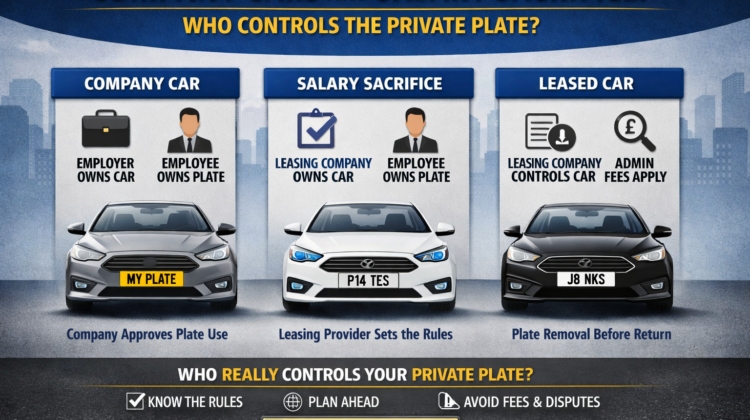
When a company car or salary sacrifice vehicle enters the picture, the question of who actually controls a private number plate becomes more complicated than most drivers expect. A cherished registration feels personal — it’s part of your identity, your brand, sometimes even your business. But when the vehicle itself isn’t legally yours, the rules around ownership, transfer rights, and plate removal can become a minefield.
This guide breaks down exactly how private plate control works across company cars, salary sacrifice schemes, lease vehicles, and fleet arrangements, so drivers and employers can avoid disputes, delays, and unexpected costs.
Why Private Plate Ownership Gets Complicated
A private registration is legally separate from the vehicle it’s displayed on. The DVLA treats the plate as an asset in its own right, and the person or organisation named as the grantee or nominee on the V750/V778 certificate is the legal controller of the registration.
But when the car belongs to someone else — your employer, a leasing company, or a salary sacrifice provider — the following issues arise:
- Who has the right to assign the plate to the vehicle
- Who must approve the assignment
- Who controls the V5C logbook
- Who can remove the plate when the car is returned
- Who pays the fees
- What happens if the employer changes policy or the employee leaves
Understanding these points early prevents a lot of stress later.
Company Cars: Who Controls the Plate?
With a traditional company car, the vehicle is owned or financed by the employer. That means:
- The V5C is in the company’s name
- The company must approve any plate assignment
- The company must handle the DVLA paperwork
- The company can refuse a plate transfer if it conflicts with policy
If the employee owns the private plate
Most employers allow staff to use their own private plates on company cars, but they are not obliged to. If they do allow it, they may require:
- A signed agreement confirming the plate belongs to the employee
- A commitment to remove the plate before the car is returned or sold
- The employee to pay assignment and retention fees
- The employee to arrange removal before leaving the company
Important: If the employee leaves and the plate is still on the car, the company legally controls the vehicle — and therefore controls the plate until it is removed. This is where disputes often arise.
Salary Sacrifice Cars: A Different Set of Rules
Salary sacrifice schemes are more complex because the vehicle is usually owned by a third‑party leasing provider, not the employer or the employee.
This means:
- The leasing company controls the V5C
- The leasing company must approve the plate assignment
- Some providers allow private plates; others refuse entirely
- Removal must be arranged before the vehicle is handed back
Who owns the plate?
If the employee purchased the plate, they remain the legal owner — but they cannot assign or remove it without the leasing company’s cooperation.
Common restrictions in salary sacrifice schemes
Many providers impose rules such as:
- No private plates allowed on electric vehicles
- No plates allowed if the contract is under 24 months
- Mandatory admin fees for assignment and removal
- Deadlines for removal before contract end
- Penalties if the plate delays the return process
Employees should always check the scheme handbook before attempting to assign a plate.
Lease Cars and Fleet Vehicles
For leased company cars, the leasing company is the legal keeper. Their policies vary, but typically:
- They will allow private plates if requested early
- They charge admin fees (£25–£75 is common)
- They require the plate to be removed before return
- They will not release the car until the plate is off
If the plate is not removed in time, the leasing company may:
- Charge additional rental days
- Charge late return penalties
- Sell the vehicle with the plate still attached (rare, but it has happened)
This is why plate removal should be arranged weeks, not days, before the contract ends.
Who Pays the Fees?
There are three types of costs involved:
- Assignment fee (usually included in the certificate)
- Retention/removal fee (£80)
- Leasing or company admin fees
Typical arrangements
- Employee-owned plate on company car: Employee pays all DVLA fees; employer may charge admin.
- Employer-owned plate on company car: Employer pays all fees.
- Employee-owned plate on salary sacrifice car: Employee pays DVLA fees; leasing company charges admin.
- Plate owned by the business: Business pays all fees and controls the plate.
Who Controls the Plate When the Employee Leaves?
This is the most common flashpoint.
If the employee owns the plate
They must:
- Request removal before their final day
- Pay the DVLA retention fee
- Ensure the company or leasing provider completes the paperwork
- Provide a new replacement plate for the vehicle
If they fail to do this, the employer may:
- Keep the plate on the car until they have time to process removal
- Charge admin fees
- Refuse to release the plate until all costs are settled
- In extreme cases, dispose of the vehicle with the plate still attached
If the employer owns the plate
The employee has no rights to it, even if they paid for the assignment.
What Happens If the Company Sells the Car?
If the plate is still on the vehicle when it is sold or returned to the leasing company, the plate goes with the car unless removed beforehand.
The DVLA will not intervene unless:
- The plate is on retention
- The plate is assigned to a different vehicle
- The legal keeper requests a transfer
This is why plate removal must be done before the vehicle leaves the company’s control.
Best Practices for Employees
To protect your private plate:
- Keep the V750/V778 certificate safe and up to date
- Confirm company or leasing policies before assigning
- Put removal deadlines in your calendar
- Start removal at least 4–6 weeks before returning the car
- Never assume the employer will handle the paperwork
- Always keep proof that the plate belongs to you
Best Practices for Employers
To avoid disputes:
- Have a clear written policy on private plates
- Require employees to sign a plate‑use agreement
- Set deadlines for removal before vehicle return
- Charge reasonable admin fees
- Keep copies of all DVLA documents
- Ensure fleet managers understand the process
A clear policy protects both the business and the employee.
Private plates and company vehicles can coexist smoothly — but only when everyone understands who controls what. The key principle is simple: the plate belongs to the person or organisation named on the certificate, but the vehicle’s keeper controls the assignment process.
For employees, that means planning ahead and keeping documentation in order. For employers, it means having a clear policy and consistent procedures. With the right preparation, your cherished registration can move from vehicle to vehicle without drama, even in complex company car or salary sacrifice arrangements.

Jon Cherry is a Director of leading personalised number plate dealer Regplates.com. Jon has over 25 years industry experience handling some of the most expensive plates ever sold with many high profile and celebrity clients. Active since 1991 in the number plate industry, Jon is currently Chairman of the Cherished Numbers Guild, a trade body representing number plate dealers in the UK. Jon has written many articles on the industry and insight into the future of numberplates and the market as a whole.