
 "Excellent service and fast delivery"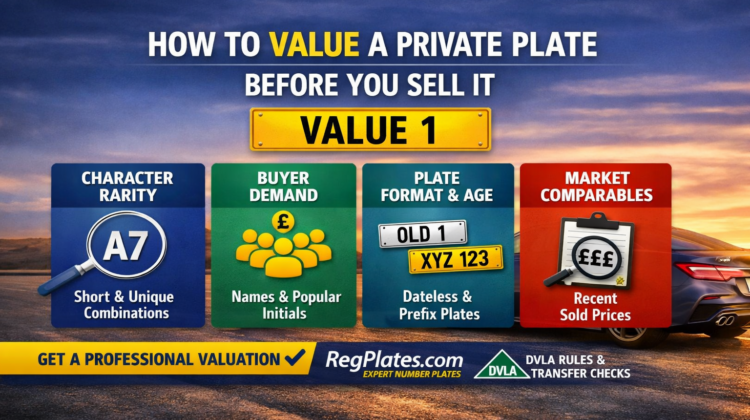
Takeaway: The value of a private plate is shaped by character rarity, buyer demand, age format, and market comparables. A proper valuation blends these factors with recent sales data and realistic pricing strategy.
Selling a private number plate can be surprisingly lucrative — but only if you know what it’s actually worth. Many sellers either undervalue their plate and lose money, or overprice it and watch it sit unsold for months. A smart valuation avoids both extremes.
What “Value” Really Means in the Private Plate Market
A private plate’s value isn’t fixed. It’s a market-driven estimate based on what real buyers are willing to pay today. That means your plate’s worth is shaped by:
- Rarity — how many similar combinations exist
- Desirability — how many people want that specific style
- Format — dateless plates often command the highest prices
- Condition and legality — clean history, no spacing issues
- Market timing — seasonal demand and buyer trends
Understanding these factors helps you avoid guesswork and price your plate with confidence.
The Four Core Factors That Determine a Plate’s Value
1. Character Rarity and Combinations
Some combinations are inherently more valuable because they’re scarce. For example:
- Short plates (e.g., A7, J22, 9 XY)
- Initials that match common names (e.g., JON, SAM, TOM)
- Word plates (e.g., GAM 3S, CAB 33S, BO 55)
- Dateless formats from pre‑1963 vehicles
The fewer characters a plate has, the more premium it becomes. A two‑ or three‑character plate can be worth thousands more than a longer equivalent simply because supply is tiny.
2. Buyer Demand and Name Popularity
Demand is often driven by names, initials, and business relevance.
- Plates matching popular names (e.g., EMM, DAN, WILL) sell quickly.
- Business‑friendly plates (e.g., TAX1, PLUMER, BUILDERS) attract trade buyers.
- Plates with universal appeal (e.g., VIP, Number 1 plates, car related plates ie 911) hold value well.
If your plate appeals to a broad audience, its value increases. If it’s niche, it may still be valuable — but only to the right buyer.
3. Plate Format and Age
The UK has several plate formats, each with different value profiles:
- Dateless plates — highest value, no age identifier
- Suffix/prefix plates — strong mid‑market performers
- Current style plates — generally lower value unless forming a name
- Northern Irish plates — affordable but less desirable
Dateless plates can fetch anywhere from £500 to £100,000+, depending on the characters. Meanwhile, a current‑style plate might be worth £250–£800 unless it forms a perfect name.
4. Market Comparables
Just like property valuation, private plates rely on comparable sales.
Look at:
- Plates with the same initials
- Plates with similar length
- Plates forming similar names
- Plates with the same format
If similar plates are listed at £1,200–£1,500 and selling within weeks, you have a realistic benchmark.
How to Perform a Proper Valuation Step-by-Step
Step 1: Analyse the Characters
Break the plate down into:
- Initials
- Name potential
- Word potential
- Number significance (e.g., 1, 7, 88, 999)
Numbers like 1, 7, 9, 11, 22, 88, and 999 often add value because they’re visually appealing or culturally significant.
Step 2: Check Similar Plates on the Market
Search for plates with:
- The same initials
- The same number pattern
- The same format
- The same length
This gives you a realistic price range. Avoid comparing your plate to “dreamer listings” — the ones priced at £50,000 but never selling.
Step 3: Consider the Buyer Pool
Ask yourself:
- Is this plate for a name?
- Is it for a business?
- Is it a status plate?
- Is it a collector’s plate?
The broader the pool, the higher the value.
Step 4: Factor in Transferability
A plate with a clean history and no spacing issues is easier to sell. Buyers want reassurance that:
- It’s legally transferable
- It’s not subject to a retention dispute
- It hasn’t been mis-spaced or altered
A plate with a clean DVLA record is always more valuable.
Step 5: Use a Professional Valuation
A professional valuation gives you:
- A realistic price
- A recommended sale range
- Insight into buyer demand
- A sense of how quickly it may sell
RegPlates.com offers free valuations and expert guidance, which can help you avoid underpricing or overpricing.
Common Mistakes That Lead to Incorrect Valuations
Overvaluing Based on Sentiment
Just because a plate is meaningful to you doesn’t mean the market agrees. Buyers pay for characters, not memories.
Comparing Against Unrealistic Listings
Some sellers list plates at inflated prices hoping for a lucky buyer. These listings distort expectations but don’t reflect real value.
Ignoring Format Differences
A plate like JON 1 is not comparable to JON 123 — even if the letters match. Format is a major value driver.
Forgetting About Transfer Costs
Buyers factor in:
- DVLA assignment fees
- Retention fees
- Dealer fees
If your price is too high before fees, buyers may walk away.
How to Increase the Value Before Selling
1. Put the Plate on Retention
A plate on a retention certificate is easier to sell because:
- The buyer can assign it instantly
- There’s no risk of vehicle complications
- It feels more “ready to buy”
2. Provide Clear, Legal Spacing
Illegal spacing reduces value and can scare off buyers. Present the plate exactly as DVLA requires.
3. Market It Professionally
High-quality listings with:
- Clean images
- Clear descriptions
- Accurate spacing
- Transfer details
…sell faster and often for more money.
When to Sell: Timing Matters
Private plate demand peaks at certain times:
- January–March — new car season
- September — plate change
- Pre‑Christmas — gift buyers
- Summer — prestige and sports car season
Selling during high‑demand periods can increase your final price by 10–20%.
Using RegPlates.com to Value and Sell Your Plate
RegPlates.com offers expert valuations backed by decades of market experience. You can explore similar plates, check current demand, and get a personalised valuation.
Useful internal resources:
- Private Plate Valuations — request a tailored valuation
- Sell Your Number Plate — guidance on listing and transfer
External reference:
- DVLA Retention & Assignment Rules (gov.uk) — essential for understanding legal transfer requirements.
Final Pricing Strategy: How to Set the Right Asking Price
A strong pricing strategy includes:
- A realistic market value — based on comparables
- A slightly higher asking price — to allow negotiation
- A minimum acceptable price — your walk-away point
For example:
- Market value: £1,200
- Asking price: £1,495
- Minimum: £1,100
This gives you flexibility while still protecting your bottom line.
Key Takeaways
- A private plate’s value is shaped by rarity, demand, format, and market comparables.
- Avoid emotional pricing — stick to data.
- Professional valuations help you avoid costly mistakes.
- Timing and presentation can increase your final sale price.
- RegPlates.com provides expert support for valuation and selling.

Jon Cherry is a Director of leading personalised number plate dealer Regplates.com. Jon has over 25 years industry experience handling some of the most expensive plates ever sold with many high profile and celebrity clients. Active since 1991 in the number plate industry, Jon is currently Chairman of the Cherished Numbers Guild, a trade body representing number plate dealers in the UK. Jon has written many articles on the industry and insight into the future of numberplates and the market as a whole.