
 "Excellent service and fast delivery"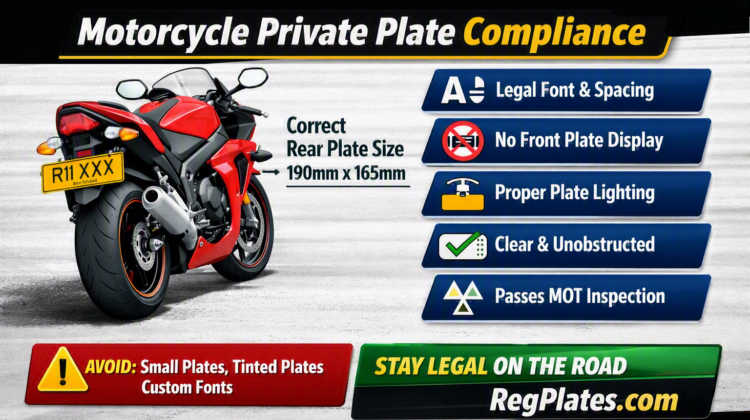
Private number plates are hugely popular among UK motorists, but motorcycle owners often face a slightly different set of rules, practical considerations, and display requirements compared with car drivers. While the DVLA regulates all vehicle registrations under the same legal framework, the way those rules apply to motorcycles can vary in important ways. Whether you ride a sports bike, cruiser, tourer, or classic machine, understanding these differences ensures you stay compliant while still enjoying the personalisation and prestige of a private registration.
This guide breaks down everything motorcycle owners need to know — from plate sizes and display rules to transfer processes, MOT implications, and common pitfalls that catch riders out.
Why Motorcycles Have Different Number Plate Rules
Although private plates themselves follow the same DVLA format regardless of vehicle type, motorcycles are subject to additional display regulations. These differences exist for two main reasons:
- Visibility and identification: Motorcycles are smaller, faster to manoeuvre, and harder to identify from the front.
- Safety and practicality: The design of a bike limits where a plate can be mounted without interfering with lights, suspension, or tyre clearance.
Because of this, the DVLA enforces stricter rules on plate placement and size for motorcycles compared with cars.
Plate Size Requirements for Motorcycles
One of the biggest differences is number plate dimensions. Cars have more flexibility, especially with private plates, but motorcycles must follow a specific format.
Standard Motorcycle Plate Size
The legally recognised size for motorcycle plates is:
- 190mm x 165mm (commonly referred to as the “motorcycle standard”)
This size ensures characters remain large enough to be read clearly at distance.
Character Size Rules
Motorcycles must use:
- 64mm tall characters
- 44mm wide characters
- 10mm stroke width
- 10mm character spacing
- 13mm margin around the plate
These measurements are not optional. Even with a private plate, you cannot reduce character size to create a smaller or more stylised plate.
Cars, by contrast, can use standard oblong plates, square plates, or even custom-shaped plates (as long as they remain legal). Motorcycles do not have this flexibility.
Front Plates: Why Motorcycles Don’t Use Them
Cars must display plates on both the front and rear. Motorcycles, however, only display a rear plate.
This rule dates back decades and is based on safety. A front-mounted plate on a motorcycle:
- Creates a hazard in a collision
- Interferes with steering and suspension
- Is difficult to mount securely
- Can obstruct lights or indicators
Because of this, motorcycles are exempt from front plate requirements — but this also means the rear plate must be especially clear and compliant.
Private Plate Transfers: The Process Is the Same — But With One Key Difference
Transferring a private plate onto a motorcycle follows the same DVLA process used for cars:
- Apply online via the DVLA’s assignment service
- Provide the V5C logbook
- Ensure the bike is taxed or SORN
- Fit a compliant plate once approved
However, there is one notable difference:
Motorcycles Cannot Display Certain Plate Styles
Some private plates — especially older or novelty styles — may be physically impossible to display legally on a motorcycle due to size constraints.
For example:
- Shortened plates
- Custom-shaped plates
- Oversized plates designed for 4x4s or imports
If the plate cannot be displayed in the required motorcycle format, it cannot legally be used on the bike.
For guidance on choosing a plate that fits your motorcycle correctly, see RegPlates.com’s private plate buying guide.
Motorcycle MOT Rules for Private Plates
A private plate does not affect your MOT status — but the way it is displayed certainly can.
Your motorcycle will fail its MOT if:
- The plate is too small
- Characters are incorrectly spaced
- The font is non‑standard
- The plate is angled excessively
- The plate is obscured by mudguards, luggage, or accessories
- The plate is damaged or faded
Motorcycles are more prone to vibration, road spray, and debris, so plates often suffer more wear than those on cars. Regular checks are essential.
For more MOT‑related guidance, you can also read RegPlates.com’s article on MOT compliance and number plates.
Lighting Requirements: Another Key Difference
Cars must illuminate their rear plates at night. Motorcycles also require plate lighting, but the setup is often more compact and integrated into the tail unit.
Your bike must have:
- A white light illuminating the rear plate
- A light that is clearly visible from behind
- A light that does not alter the colour of the plate
If you fit a tail tidy — a popular modification — ensure the plate light remains compliant. Many aftermarket kits include LED lighting, but not all meet DVLA brightness standards.
Spacing and Font Rules: No Exceptions for Motorcycles
Private plates must follow DVLA rules for:
- Font style (Charles Wright)
- Character spacing
- Margins
- No italic or decorative fonts
- No tinted plates
These rules apply equally to motorcycles and cars. However, because motorcycle plates are smaller, spacing errors are more noticeable and more likely to attract police attention.
Common Mistakes Motorcycle Owners Make
Motorcycle riders often fall foul of plate regulations without realising it. Here are the most common issues:
1. Using a plate that is too small
Many riders prefer a compact plate for aesthetics, but anything smaller than the legal size risks fines.
2. Incorrect spacing
Private plates with fewer characters can tempt owners to tighten spacing — but this is illegal.
3. Tail tidy issues
Aftermarket kits sometimes angle the plate too steeply or reduce visibility.
4. Missing plate light
A surprisingly common MOT failure.
5. Using show plates on the road
Show plates are legal only for display or off‑road use.
6. Fitting a plate that doesn’t suit the bike
Some private plates simply don’t look right on a motorcycle due to layout or spacing. Riders often choose shorter plates for aesthetic reasons, but these must still meet legal dimensions.
Are Private Plates More Popular on Cars Than Motorcycles?
Yes — but the gap is narrowing.
Cars still dominate the private plate market because:
- They have more space for creative plate designs
- Plates are more visible
- Owners often use plates for business branding or prestige
However, motorcycle riders increasingly use private plates to:
- Personalise their bike
- Match a plate to a model name (e.g., “R1 XXX”)
- Celebrate a milestone or anniversary
- Add character to a classic or custom build
The rise of premium sports bikes and custom motorcycles has made private plates more desirable than ever.
Insurance Considerations
Private plates do not increase insurance premiums, but you must inform your insurer when assigning or removing a plate. Failure to do so can cause issues if your bike is stolen or written off.
Motorcycles are stolen more frequently than cars, so accurate registration records are essential.
Where to Buy a Private Plate for Your Motorcycle
Motorcycle owners can purchase private plates from DVLA auctions, brokers, or specialist dealers. For a safe, compliant, and fully managed process, RegPlates.com offers:
- DVLA‑approved transfers
- Secure documentation handling
- Expert guidance on plate suitability for motorcycles
- A wide range of plates that fit motorcycle formats
Useful External Resources
For further reading, here are two authoritative external sources:
- DVLA Number Plate Display Regulations
- Motorcycle MOT Testing Manual (DVSA)
Final Thoughts
Private plates for motorcycles follow the same legal principles as those for cars, but the practical application is very different. From plate size and lighting to spacing and mounting angles, motorcycle owners must pay close attention to DVLA rules to stay compliant.
A well-chosen private plate can add personality, prestige, and individuality to your bike — just make sure it’s displayed correctly and legally. With the right guidance and a compliant plate, your motorcycle can stand out for all the right reasons.
Jon Cherry is a Director of leading personalised number plate dealer Regplates.com. Jon has over 25 years industry experience handling some of the most expensive plates ever sold with many high profile and celebrity clients. Active since 1991 in the number plate industry, Jon is currently Chairman of the Cherished Numbers Guild, a trade body representing number plate dealers in the UK. Jon has written many articles on the industry and insight into the future of numberplates and the market as a whole.