
 "Excellent service and fast delivery"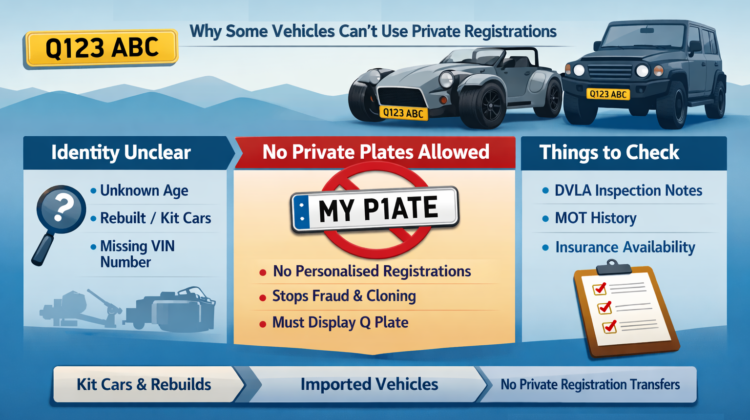
Q‑plates are one of the least‑understood parts of the UK registration system — and for good reason. They’re rare, they look unusual, and they come with strict rules that prevent owners from transferring or displaying private registrations. For motorists, collectors, and anyone buying or selling a vehicle, understanding Q‑plates is essential for avoiding costly mistakes and ensuring DVLA compliance.
This article breaks down exactly what Q‑plates are, why they exist, which vehicles receive them, and why private registrations can’t be used on them. It also covers the legal implications for buyers and sellers, plus practical steps if you’re considering a vehicle that already carries a Q‑prefix.
What Q‑Plates Actually Are
Q‑plates are UK registration marks beginning with the letter Q, issued by the DVLA when a vehicle’s age or identity cannot be reliably confirmed. The “Q” stands for “Query,” signalling that the DVLA has unresolved questions about the vehicle’s origin.
A typical Q‑plate looks like:
- Q123 ABC
- QX12 YTR
These registrations follow standard DVLA formatting rules but are instantly recognisable because no other UK registration series begins with Q.
Why the DVLA Issues Q‑Plates
The DVLA only assigns Q‑plates in situations where a vehicle’s identity cannot be proven to the required legal standard. This usually happens when:
- The chassis or VIN number is missing, tampered with, or unreadable
- The vehicle has been heavily rebuilt using parts from multiple sources
- The vehicle’s documentation is incomplete, inconsistent, or fraudulent
- The DVLA cannot confirm the vehicle’s age for taxation or MOT classification
- The vehicle is imported without sufficient paperwork to verify its origin
In short: Q‑plates are used when the DVLA cannot be certain what the vehicle actually is.
Why Vehicles With Q‑Plates Cannot Use Private Registrations
Private registrations are designed to be assigned to vehicles with a confirmed identity and age. Because Q‑plate vehicles lack this certainty, the DVLA prohibits any transfer of personalised registrations to them.
There are three core reasons:
1. Age Concealment Concerns
Private plates can obscure a vehicle’s age — which is perfectly legal for normal vehicles — but not for vehicles with unknown identity. The DVLA will not allow a private plate to imply an age that cannot be verified.
2. Fraud Prevention
If a vehicle’s identity is uncertain, allowing a private plate could make it easier to disguise stolen or cloned vehicles. Q‑plates act as a permanent marker that the vehicle’s history is incomplete.
3. Record‑Keeping Integrity
DVLA databases rely on accurate identity records. A Q‑plate signals that the vehicle is an exception. Allowing private plates would break the chain of traceability.
This rule is absolute: no private registration can ever be assigned to a Q‑plate vehicle, regardless of circumstances.
Common Scenarios That Lead to Q‑Plates
Understanding how vehicles end up with Q‑plates helps buyers avoid surprises. The most frequent causes include:
- Kit cars and self‑builds where major components come from multiple donor vehicles
- Heavily restored classics with missing or replaced chassis numbers
- Vehicles rebuilt after serious damage where identity markers were destroyed
- Imports from outside the EU with incomplete or unverifiable paperwork
- Recovered stolen vehicles where identifying numbers were removed
- Engine swaps or chassis replacements without proper documentation
In many cases, owners don’t realise their vehicle is at risk of receiving a Q‑plate until DVLA inspection.
value because:
- Buyers may worry about hidden history
- Insurance premiums can be higher
- Some insurers refuse to cover Q‑plate vehicles
- The vehicle cannot display a private registration
- Enthusiasts often prefer vehicles with traceable provenance
However, for kit cars or specialist builds, Q‑plates are common and accepted. In those markets, value impact is smaller.
MOT and Tax Rules for Q‑Plate Vehicles
Because the DVLA cannot confirm the vehicle’s age, Q‑plate vehicles are treated differently for MOT and tax purposes:
- MOT exemption is not allowed, even if the vehicle appears old enough
- Historic vehicle tax exemption cannot be applied, because the age is unknown
- The vehicle is taxed based on its engine size or emissions (where applicable)
This can make ownership more expensive compared to age‑verified classics.
Can a Q‑Plate Ever Be Removed?
In rare cases, yes — but only if the owner can provide new, verifiable evidence proving the vehicle’s true identity or age. This might include:
- Manufacturer documentation
- Expert reports
- Original VIN confirmation
- Historic records
- Photographic evidence of restoration
If the DVLA accepts the evidence, the Q‑plate may be replaced with an age‑appropriate registration. However, this is uncommon and requires strong proof.
Buying a Vehicle With a Q‑Plate: What to Check
If you’re considering purchasing a Q‑plate vehicle, take extra care:
- Confirm the reason the Q‑plate was issued
- Check the DVLA inspection notes if available
- Ensure the vehicle passes an MOT without advisories relating to identity
- Verify insurance availability before committing
- Understand that private plates cannot be used
- Check that the vehicle’s documentation is complete and consistent
For more guidance, see buying a used car with a private plate — even though Q‑plate vehicles cannot use private registrations, the same due‑diligence principles apply.
Q‑Plates and Private Plate Ownership
If you already own a private registration, you cannot assign it to a Q‑plate vehicle. The DVLA will reject the application automatically.
However, you can still:
- Retain the private plate on a certificate
- Assign it to another eligible vehicle
- Sell or transfer the registration to someone else
For a deeper look at how private plates work, see how private plates affect a vehicle’s age.
When Q‑Plates Are Not a Problem
In some cases, Q‑plates are simply part of the vehicle’s identity and not a negative:
- Kit cars: Many owners expect Q‑plates
- Custom builds: Identity is less important than craftsmanship
- Track cars: Road identity matters less than performance
- Off‑road conversions: Age verification may be impossible
For these vehicles, a Q‑plate is normal and does not affect enjoyment or usability.
For official DVLA guidance on Q‑plate and vehicle identity checks, see the government’s page on rebuilt and radically altered vehicles:
Q‑plates serve an important purpose: they protect buyers, prevent fraud, and ensure the DVLA maintains accurate records. While they do limit what you can do with private registrations, they also provide clarity about a vehicle’s status when its identity cannot be fully confirmed.
If you’re buying, selling, or restoring a vehicle, understanding Q‑plates helps you make informed decisions — and avoid surprises when dealing with registrations.

Jon Cherry is a Director of leading personalised number plate dealer Regplates.com. Jon has over 25 years industry experience handling some of the most expensive plates ever sold with many high profile and celebrity clients. Active since 1991 in the number plate industry, Jon is currently Chairman of the Cherished Numbers Guild, a trade body representing number plate dealers in the UK. Jon has written many articles on the industry and insight into the future of numberplates and the market as a whole.