
 "Excellent service and fast delivery"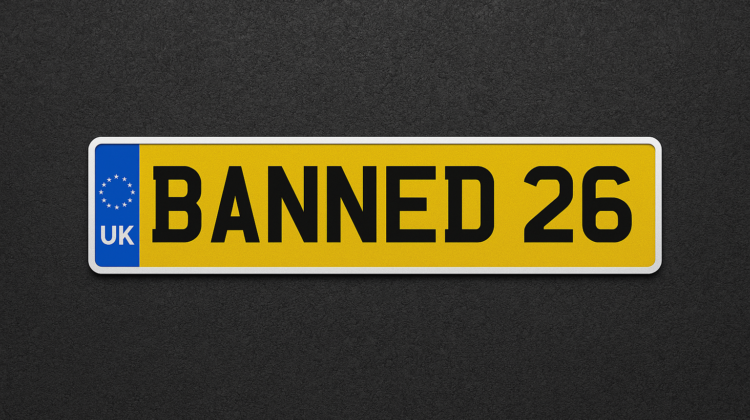
Every March and September, the release of new UK number plate formats sparks excitement among motorists, collectors, and private plate enthusiasts. But alongside the fresh combinations comes something far more intriguing: the list of banned plates. For 2026, the DVLA’s “Banned 26” plates have once again stirred curiosity. Why are certain registrations withheld? Who decides what’s offensive? And what does this mean for drivers and plate collectors?
The world of number plates is more complex than it looks. Beneath the surface lies a careful balancing act between free expression, public decency, and the DVLA’s responsibility to prevent offence on the road. Let’s explore what’s been withheld for 2026 — and why these decisions matter more than ever.
Why the DVLA Bans Certain Plates
The DVLA screens every new registration sequence before release. While most combinations are harmless, some letter and number pairings can unintentionally form words, abbreviations, or phrases that are:
- Sexually explicit
- Racially or religiously offensive
- Politically sensitive
- Linked to violence, drugs, or criminality
- Insensitive to current events
- Vulgar, crude, or socially inappropriate
The DVLA’s review panel meets twice a year to filter out anything that could cause offence or embarrassment. Their decisions aren’t arbitrary — they’re based on public standards, cultural awareness, and evolving social sensitivities. You can read more about their approach directly on the DVLA’s personalised registration guidance (gov.uk).
While some motorists might find the bans overly cautious, the DVLA’s stance is simple: number plates are public-facing identifiers. They shouldn’t cause distress, upset, or controversy.
Understanding the “26” Format
The 2026 plates follow the standard UK format:
- March release: 26
- September release: 76
This means every new plate begins with A–Y, followed by 26 or 76, then three random letters.
It’s the final three letters — and sometimes the initial letter — that create potential problems. When combined with “26,” certain sequences can resemble offensive words or acronyms.
Examples of 2026 Plates Likely to Be Withheld
While the DVLA doesn’t publish the full banned list, patterns from previous years make it easy to predict what’s been pulled for 2026. These examples illustrate the types of combinations that never make it to the public.
1. Plates with sexual references
Anything that hints at explicit content is automatically rejected. Expect bans on combinations such as:
- BNG, SHG, FKN, SXY, 69X, LUV, XXX
Even if a combination seems humorous to some, the DVLA errs on the side of caution.
2. Plates referencing violence or crime
Registrations that could glorify violence, weapons, or criminal behaviour are routinely withheld:
- KLR, GUN, BDY, H8R, WAR
In a time of heightened sensitivity around public safety, these bans are unsurprising.
3. Plates with religious or political sensitivity
The DVLA avoids anything that could be interpreted as disrespectful or inflammatory:
- GOD, ALL, JIH, ISIS, BNP, IRA
Political neutrality is essential, especially in a diverse society.
4. Plates referencing drugs or alcohol
Combinations that appear to promote illegal substances or excessive drinking are removed:
- DRG, POT, COK, BUD, ALC
5. Plates that could be seen as insulting
Insults, slurs, or derogatory abbreviations are always banned:
- IDI, FOO, MUG, DUM, PRK
Even mild insults are considered inappropriate for public roads.
6. Plates insensitive to current events
This category changes year by year. If a major event occurs — such as a natural disaster, political crisis, or public tragedy — related combinations are withheld out of respect.
Why the Banned List Keeps Growing
The number of withheld plates increases every year. There are several reasons for this:
1. Language evolves
New slang, abbreviations, and internet culture create fresh opportunities for unintended meanings.
2. Social standards shift
What was acceptable 20 years ago may not be acceptable today.
3. The DVLA takes a more proactive approach
With social media amplifying public reaction, the DVLA is more cautious than ever.
4. The UK’s multicultural landscape
The DVLA considers how plates might be interpreted across different languages and cultures.
How the DVLA Reviews Plates
The review process is surprisingly thorough. A panel of DVLA staff meets twice a year to examine:
- New plate formats
- Potential offensive combinations
- Public complaints from previous years
- Cultural and political developments
They also consult external references when needed. If a plate is borderline, it’s usually withheld. The DVLA’s guiding principle is simple: if in doubt, leave it out.
Are Banned Plates Ever Released Later?
Occasionally, yes — but it’s rare.
If a combination was banned due to a specific event or temporary sensitivity, it may be reconsidered in future years. However, plates with sexual, racist, or violent connotations are permanently withheld.
Collectors sometimes petition for certain plates to be released, but the DVLA rarely overturns decisions.
What This Means for Private Plate Collectors
For enthusiasts, the banned list is more than a curiosity — it shapes the market.
1. Scarcity increases value
If a combination is borderline but still released, it can become highly sought after.
2. Banned themes create collector interest
Some collectors track banned plates as part of number‑plate history.
3. The 2026 format offers new opportunities
With “26” and “76” entering circulation, fresh combinations will appeal to:
- Birth years
- Lucky numbers
- Business branding
- Initial‑based plates
If you’re exploring personalised options, our guide on how to choose the perfect private plate offers helpful insights.
How to Check Whether a Plate Is Allowed
If you’re considering a personalised registration, you can:
- Use the DVLA’s online search tool
- Contact a reputable dealer
- Ask the DVLA directly for clarification
At RegPlates.com, we specialise in helping customers navigate the rules and secure plates that are both legal and meaningful. Our article on DVLA rules for personalised registrations breaks down the essentials.
The Bigger Picture: Why Banned Plates Matter
Some people view the banned list as overly strict, but it serves an important purpose.
1. Protecting public decency
Number plates are visible to everyone — including children.
2. Preventing offence
A plate that seems funny to one person may be deeply offensive to another.
3. Maintaining road professionalism
Vehicles are part of public infrastructure. Offensive messaging undermines that.
4. Avoiding unnecessary complaints
The DVLA receives thousands of complaints each year about inappropriate plates. Prevention is easier than enforcement.
Looking Ahead: What to Expect Beyond 2026
As we move toward the 2030s, expect the DVLA’s banned list to grow even more. With new slang, cultural shifts, and global events shaping public perception, the panel’s job becomes increasingly complex.
But one thing remains constant: the UK’s passion for personalised plates. Whether you’re a collector, a motor enthusiast, or simply someone who loves a unique registration, the world of number plates continues to evolve — and the banned list is a fascinating part of that story.
The DVLA’s Banned 26 Plates for 2026 offer a glimpse into the delicate balance between personal expression and public responsibility. While some withheld combinations may seem harmless, the DVLA’s cautious approach ensures that UK roads remain respectful and inclusive.
For enthusiasts, the new 26 and 76 series bring exciting opportunities — and a few mysteries. And as always, RegPlates.com is here to help you navigate the world of personalised registrations with confidence.
Jon Cherry is a Director of leading personalised number plate dealer Regplates.com. Jon has over 25 years industry experience handling some of the most expensive plates ever sold with many high profile and celebrity clients. Active since 1991 in the number plate industry, Jon is currently Chairman of the Cherished Numbers Guild, a trade body representing number plate dealers in the UK. Jon has written many articles on the industry and insight into the future of numberplates and the market as a whole.